How To Search for Cape Coral Property Records
Before buying or investing in Cape Coral real estate, it is important to check a property's history and legal status. Cape Coral property records work like background checks, helping you see if there are issues on the property, confirm ownership, and review taxes before making a purchase. Cape Coral property records hold valuable details like ownership history, property value, taxes, liens, amenities, home type, foreclosures, and zoning. Since property records are public records in the city, anyone can view or request copies. The key to knowing where to search. You can use the guide below to locate Cape Coral property records.
Lee County Clerk of Court

The Lee County Clerk of Court Office website provides access to property records, including deeds, mortgages, liens, foreclosures, maps, easements, plats, and other property-related legal instruments. The website has a Search Land Record feature where you can look up property records using the name, document type, case number, record date, considerations, and clerk file number. If you choose to obtain the document by mail, send your request to P.O. Box 2469, Ft. Myers, FL 33902.
Lee County Property Appraiser Office

Use the Lee County Property Appraiser website to access property records online. You can find information on ownership history, assessed and market value of a property, parcel details, and aerial maps for research. To conduct a quick property search online, users should have the owner or company's name, site address, postal code, and parcel number or Folio ID. The search results provide information on the Strap/Folio ID, the ownership history, site address, property description, parcel details, aerial view, variance report, property record card, and tax estimator. Alternatively, you can access property records in person at the Lee County Constitutional Complex, 2480 Thompson Street, 4th floor, Fort Myers, Florida 33901. Although the office entertains in-person requests for property records, you must schedule an appointment before visiting the office.
City of Cape Coral
The city of Cape Coral also provides online access to property records through its Property Information webpage. The Property Values tool provides market information and assessed values, ownership history, and historic data about the property. You can search the record using the property address, owner name, or strap number. The Property Taxes feature offers information on tax history, payments, balances, and due dates. For deeper insight, the Property Profile (via GIS online) shows property profiles with zoning land use, lot size, and maps. Together, these tools give a complete picture of a property's value, taxes, and permitted uses. You can also access the record in person at the City of Cape Coral, 1015 Cultural Park Boulevard, Cape Coral, FL 33990.
Cape Coral Property Taxes
Cape Coral property taxes play a vital role in funding essential local services. These taxes provide money for public schools, fire, police, and EMS services, as well as parks, libraries, road maintenance, and general city and county operations. Each year, the Lee County Property Appraiser values all properties as of January 1. This assessed value is used, along with the tax rate set by the city, county, and school board, to calculate how much each property owner must pay.
Once the values are finalized, the Lee County Tax Collector mails out tax bills every November 1. Property taxes are due once annually, with the full amount payable by March 31. Property owners who pay early between November and February receive discounts: 4% in November, 3% in December, 2% in January, and 1% in February. If the property tax is not paid by April 1, it becomes delinquent, and interest and collection fees are added. By June, the Tax Collector holds a tax certificate sale, where investors pay off the delinquent taxes in exchange for a lien on the property. If the owner still fails to pay after two years, the lien holder can apply for a tax deed sale, which can result in the property being auctioned.
You can pay property taxes in several ways: online by credit card, debit card, or e-check, by mail with a check or money order, in person, or by wire transfer for large amounts. If you are paying in person, you can visit the Lee County Tax Collector's office located at 2480 Thompson Street, Fort Myers, FL 33901. The office opens for walk-in services from 8:30 a.m. to 5:00 p.m., Monday through Friday. Additionally, you can go to the Cape Coral branch at 1039 Southeast 9th Avenue, Cape Coral, FL 33990, to access property tax services. The Cape Coral branch opens on Monday through Thursday from 8:30 a.m. to 5:00 p.m. and on Fridays from 9:00 a.m. to 5:00 p.m.
![]() Assessments
Assessments

The Lee County Property Appraiser handles property assessments for tax purposes for the city of Cape Coral. Properties are reassessed each year as of January 1 using the standard appraisal methods: the sales comparison (recent sales), the cost approach (replacement value minus depreciation), and the income approach (for income properties). The assessed value aims to reflect fair market value, but taxable value can be lower due to exemptions or caps like the Homestead.
If you disagree with your assessment, first request a formal review with the Property Appraiser. If it is still unresolved, you can file a petition with the Lee County Value Adjustment Board. You can obtain the petition form at the Cape Coral Clerk's Office, or at the Lee County Property Appraiser's Office, or file the petition online.
![]() Appraisals
Appraisals

In Cape Coral, property assessment works much like appraisals. Both estimate a property's fair value by comparing it to similar homes recently sold in the area. For unique buildings or new constructions, the county may bring in an appraiser to help set the value. Appraisals are also used by estate planners, courts, and lenders to evaluate real estate, making them essential for fair pairing and financial decisions.
![]() Tax Rates
Tax Rates

The median effective tax rate in Cape Coral, Florida, is 1.21%, significantly higher than the national median tax rate of 1.02%, but lower than the state median of 1.14%. This translates to a median annual bill of around $3,722 for Cape Coral homeowners, which is higher than the median property tax bill of $2,400. Let's compare Cape Coral's property taxes with those in other Florida counties:
- Broward County 1.44%
- Miami-Dade County 1.41%
- Orange County 1.16%
- Duval County 1.14%
- Polk County 1.16%
- Brevard County 0.95%
- Pinellas County 1.08%
- Polk County 1.16%
- Hillsborough County 1.27%
- Palm Beach County 1.34%
- Alachua County 1.03%
![]() Exemptions
Exemptions

Cape Coral homeowners generally pay high property tax bills, making affordability a challenge for most families. To help reduce costs, the Lee County Property Appraiser provides several exceptions that lower the taxable value of eligible homes. These exemptions directly reduce the amount of taxes, offering real savings for homeowners who qualify. Some exemptions in Cape Coral include:
- Homestead Exemption
- Senior Citizen Exemption for persons 65 and older
- Total and Permanently Disabled Persons Exemption
- Total and Permanently Disabled Veterans Exemption
- Widows/Widowers, Blind, and other Special Exemptions
You can apply for these exemptions by contacting the Lee County Property Appraiser's Office.
Cape Coral Building Permits/Inspections
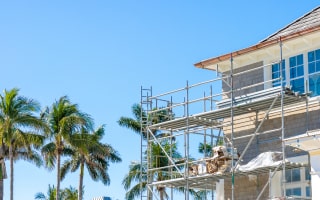
Most construction, alterations, additions, demolitions, changes of occupancy, roofing, pools, seawalls, electrical, plumbing, and mechanical work require a building permit and a required inspection to close out the permit. You can obtain a building permit from the City of Coral County Building Division. You can use the Online Building Permit Service tool on their website to apply for permits, pay for permits, check the status of your application, and schedule inspections. You can also apply for building permits in person, especially for owner-builders, at the City Hall, located at 1015 Cultural Park Boulevard, Cape Coral, FL 33990. The common permits (general and specialized) issued in Cape Coral include:
General Building Permits
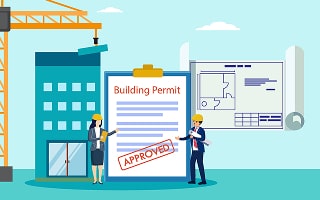
- Building Permits: It is required for all new constructions, additions, remodelings, or changes in occupancy.
- Electrical Permits: Electrical permits cover electrical service upgrades, new wiring, and installation of circuits.
- Plumbing Permits: It is needed for sewer, water line connections, fixture installation, or replacement.
- Mechanical Permits: Mechanical permits are required for work related to HVAC systems, such as heating, ventilation, and air conditioning system installation or upgrades, including ductwork.
- Demolition Permits: It is needed for the partial or complete removal of a structure.
- Fence Permits: Fence permits are required for the installation or replacement of residential or commercial fencing.
Specialty Permits

- Swimming Pool and Spa Permits: The permit is required for building in-ground or above-ground pools, spas, and related safety barriers
- Sign Permits: Required for installing or altering business, residential, or temporary signage
- Boat Dock/Seawall/Shoreline Permits: It covers marine constructions, including docks, seawalls, boat lifts, and shoreline improvements.
- Fire Permits: A fire permit is needed for fire-related systems such as sprinklers, alarms, and suppression equipment.
- Solar Permits: Required for solar panel installations or solar water heating systems.
When applying for any of these permits, you must submit the proper documentation (building plans, blueprints, contractor licenses, materials lists, etc.). You must also pay the appropriate fee.
Building inspections are part of the permit process, and they ensure that the work complies with local building and safety codes. You can schedule an inspection through the online portal or in person at the office during regular business hours.
Real Estate in the City of Cape Coral
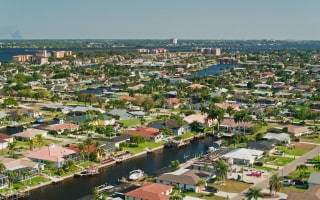
Cape Coral is a boater's paradise with over 400 miles of canals and direct Gulf access, making waterfront homes especially valuable. The city offers year-round sunshine, a lively dining scene, and close access to Sanibel and Captiva Island, attracting both permanent residents and seasonal buyers. Cape Coral, Florida, has a population of 233,000 residents. A recent planning document reports that the city has up to 112,533 housing units, with over 106,000 occupied, reflecting a 95% occupancy rate. Vacant homes account for only 5%, under 6,000 housing units. The city has a mix of condominiums, townhouses, single-family homes, apartments, historic homes, and Accessory Dwelling Units (ADUs).
The median sales price for a property in Cape Coral is $347,667, making it more affordable than both Florida's state median of $410,000 and the U.S. median of $447,000. This lower price point can attract buyers seeking value. However, within Cape Coral, home prices vary considerably, as shown below:
- Bella Vida $350,000
- Cape Harbour $557,000
- Sandoval $396,000
- Tarpon Point $970,000
- Pelican $590,000
Cape Coral's economy is strong. The metro area's GDP grew to $40.4 billion recently, up from $38.8 billion in the previous year. Job growth in the Cape Coral-Fort Myers area is around 1.9% (5,900 new jobs), faster than both Florida at 1.5% and the U.S. at 1.4%. Florida's zero state income tax and Cape Coral's favorable property taxes make real estate investment profitable. Overall, property demand is shifting from a seller's market to a more balanced, buyer-friendly one. Higher mortgage rates and rising insurance costs have slowed demand, while steady job growth and seasonal tourism still support the market.