How To Search for Orlando Property Records

A property records search is a crucial step recommended in many situations, especially when you are buying a property. This is because a property search provides access to essential information such as owner details, taxes, property values, exemptions, property features, and sales history. This information is publicly available via a property records search and typically provides rich and critical data that a buyer may use to make an informed decision on a property. However, knowing where to look when performing an Orlando property records search is key.
The list below offers valuable resources that will help individuals locate specific property records for various purposes.
Orange County Comptroller's Office

The Orange County Comptroller's Office serves as the official recorder for Orange County, Florida. This office records, indexes, and maintains a wide range of property-related documents, including deeds, liens, satisfactions, mortgages, and court judgments.
You can search property records online using the office's records search tool. Searches can be performed by name, date filed, document number, or book and page number. The advanced search feature also allows users to search by lot number, case number, parcel ID, and specific date ranges for deeds or mortgage tax documents.
If you prefer, you can visit the office in person to request copies of records. A small fee may apply for printed copies. The office is located at 109 East Church Street, Suite 300, Orlando, FL 32801. Business hours are Monday through Friday, from 7:30 a.m. to 4:00 p.m.
Orange County Property Appraiser's Office

The Orange County Property Appraiser's Office is responsible for identifying, locating, and valuing all real and personal property in the county for tax purposes. The office also tracks ownership changes and maintains official parcel boundary maps.
You can search property records online using the Property Search tool. Searches can be conducted using the owner's name, property address, or parcel details. The tool also offers filters by property-use type, such as residential or commercial. A map-based search feature is also available for locating properties visually.
If you wish to visit the Orange County Property Appraiser's Office, you can do so at 200 South Orange Avenue, Suite 1700, Orlando, FL 32801. You may also contact the office by phone at (407) 836-5044.
Orange County Tax Collector's Office

The Orange County Tax Collector's Office provides an online tool for searching property tax records. You can look up Orlando tax information by entering the owner's name, parcel ID, tangible ID, or property address.
Orange County Clerk of the Superior Court

The Orange County Clerk of Courts provides an online search tool for accessing court records, including cases involving property disputes. You can also use this tool to find probate, criminal, and family court cases. Searches can be performed using a person's name, business name, case number, citation number, or case type.
Orlando Property Taxes
Orlando property taxes play a critical role in funding essential public services throughout the city and county. Revenue from these taxes supports education, healthcare, police and fire departments, emergency medical services, libraries, parks, transportation, road maintenance, and public utilities such as water and sewer systems.
Each year, the Orange County Property Appraiser's Office assesses the value of all properties in the county. Once property values are determined, the office mails tax bills on or around November 1. The full payment is due by March 31.
Property owners can receive early-payment discounts based on when they pay:
- 4% discount if paid in November
- 3% discount if paid in December
- 2% discount if paid in January
- 1% discount if paid in February
After April 1, taxes become delinquent and may incur additional interest or penalties. If taxes remain unpaid, the county may issue a tax certificate and eventually foreclose on the property through a public auction to recover the amount owed.
Property taxes can be paid online through the Orange County Tax Collector's website using an e-check, credit card, debit card, PayPal, or wire transfer. A $1.50 processing fee applies to e-check payments, while credit and debit card payments are subject to a 2.39% service fee. Property owners may also mail a check or certified funds made payable to "Orange County Tax Collector". The parcel number should be included on the check or money order. In-person payments are accepted at Orange County Tax Collector service centers, but an appointment is required.
Taxpayers also have the option to enroll in a quarterly installment payment plan. To qualify, the previous year's taxes must exceed $100, and the account must be current. The first two payments are based on one-quarter of the prior year's bill - due June 30 (with a 6% discount) and September 30 (with a 4.5% discount). The third and fourth payments reflect the current year's taxes, with the third installment due December 31 (3% discount), and the final payment due March 31.
If you wish to visit the Orange County Tax Collector's office, the address is 301 S. Rosalind Avenue.
![]() Assessments
Assessments

The Orange County Property Appraiser's Office is responsible for conducting annual property assessments to determine the value used for calculating property taxes in Orlando. Each year on January 1, the office establishes the fair market value (FMV) of real property based on recent market sales, property features, and income data.
Property taxes are calculated by a pplying the millage rates set by local taxing authorities - including Orange County, the City of Orlando, Orange County Public Schools, and special districts - to the property's taxable value.
In August, property owners receive a TRIM (Truth in Millage) notice that outlines the assessed value, taxable value, proposed tax rates, and estimated taxes owed. If you believe the assessed value is incorrect, you can request an informal meeting with the Property Appraiser's Office or file a petition with the Value Adjustment Board (VAB) to appeal the valuation.
![]() Appraisals
Appraisals

Property assessments in Orlando are based on appraisal methods that estimate fair market value (FMV) by comparing similar properties that have recently sold in the local area. In cases involving new construction or properties with limited sales data, the Orange County Property Appraiser may conduct a more detailed review or use alternative valuation tools to determine the property's value. Appraisals are also used by estate planners, courts, and lenders to determine the value of real estate for legal and financial purposes.
![]() Tax Rates
Tax Rates

The median effective property tax rate in Orlando, Florida, is 1.19% of a home's assessed value. This is slightly above Florida's statewide median of 1.14%, and higher than the national median of 1.02%. Orlando property taxes are calculated based on the home's taxable value, which takes exemptions into account before applying the millage rate.
See how Orlando's tax rate compares to other counties in Florida:
- Alachua County 1.47%
- Broward County 1.44%
- Miami-Dade County 1.41%
- Osceola County 1.40%
- Palm Beach County 1.34%
- Hillsborough County 1.27%
- Leon County 1.19%
- Duval County 1.14%
- Seminole County 0.89%
![]() Exemptions
Exemptions

Orange County offers several exemptions that reduce the taxable value of a property and lower the tax bill. Some of the available exemptions include:
- Homestead Exemption: Reduces the assessed value of a primary residence by up to $50,000, saving homeowners about $750 per year. Applications must be submitted by March 1.
- Limited Income Senior Exemption: Available to residents 65 or older with household incomes under the state threshold (for 2025, income must be below $37,694).
- Widow/Widower Exemption: Grants a $5,000 reduction in taxable value to widows or widowers who are permanent Florida residents as of January 1.
- Disability Exemption: Provides a $5,000 reduction in taxable value for permanent residents of Orange County who have a qualifying disability.
- Military/Veterans Exemption: Offers a $5,000 exemption to honorably discharged veterans with a service-connected disability of 10-100% (not totally and permanently disabled).
- Fallen Hero Exemption: Provides a full property tax exemption to the unremarried surviving spouse of a first responder who died in the line of duty, if the deceased was a Florida resident as of January 1 of that year.
- Conservation Exemption: Allows up to a 100% exemption for non-commercial land of 40 acres or more that is permanently dedicated to conservation. Commercial land of the same size may qualify for a 50% exemption.
Other exemptions are also available under Chapter 196 of the Florida Statutes for properties owned and used by qualifying organizations, including charter schools, nonprofit institutions, and homes for the aged.
You can apply for any of these exemptions by contacting the Orange County Property Appraiser's Office.
Orlando Building Permits/Inspections
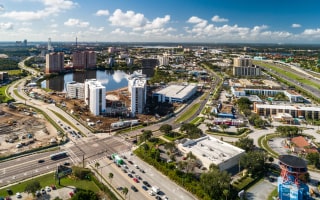
Most construction projects in Orlando require a permit. Some minor work may be exempt, but contractors, builders, and developers must obtain the proper permits before starting most projects. Permits are issued by the Permits and Inspections Division within the City of Orlando's Building and Development Department. The city's online portal provides details on what types of work require a permit and how to apply. You can also use the portal to submit applications, check the status of a permit, and schedule inspections.
The types of permits available in Orlando include:
- Building Permits: Covers new construction, additions, and major alterations. These permits are required for most structural work within the city.
- Electrical Permits: Required for wiring, service panels, and installation of electrical fixtures.
- Mechanical Permits: Covers HVAC systems, ductwork, and other mechanical equipment.
- Plumbing Permits: Required for water lines, drains, and plumbing fixtures.
- Pool and Spa Permits: For construction or major repairs of swimming pools, spas, or hot tubs.
- Fence and Sign Permits: Needed for installing new fencing or signage on a property.
- Zoning and Land Use Permits: Ensures projects comply with land-use regulations and zoning codes.
- Demolition Permits: Required to demolish a structure or part of a structure.
When applying for a permit, you must provide the proper documentation, such as construction plans, contractor licenses, or materials lists, and pay the appropriate fee.
Building inspections are part of the process and ensure all work meets local safety and building code requirements. Inspections can be scheduled online through the city's portal or in person at the office during normal business hours.
Real Estate in the City of Orlando
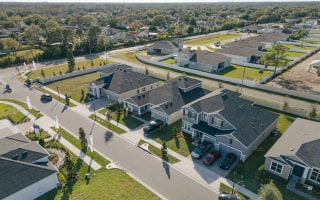
Home of the Universal Orlando Resort, Orlando, Florida, also boasts the Dr. Phillips Center for the Performing Arts, Amway Center, and Scenic Lake Eola Park. The city is also popular for its lively downtown, family-friendly neighborhoods, and its role as a major hub in Central Florida.
Orlando has a population of just over 305,000 residents and contains 133,576 housing units, according to the U.S. Census Bureau data. About 90% of these units are occupied, with 46% owner-occupied. The city offers a wide range of housing options, including single-family homes, condominiums, townhomes, apartments, and mobile homes. Styles range from traditional bungalows and ranch homes to modern townhouses and luxury estates.
The average home price in Orlando is $350,000, reflecting an 8% increase from the previous year. Homes typically sell in about 24 days, showing the strength of the market despite shifts in interest rates.
However, home prices vary significantly by neighborhood. Some examples include:
- Baldwin Park $460,000
- College Park $620,000
- Winter Park $780,000
- Lake Nona $400,000
- Dr. Phillips $650,000
- Hunters Creek $330,000
- Conway $280,000
- Azalea Park $320,000
- Washington Shores $240,000
- Thornton Park $375,000
The Orlando real estate market remains competitive, supported by steady population growth, strong rental demand, and the city's appeal as both a tourist destination and a permanent place to live. While higher interest rates have slightly extended the average time on market compared to peak seller conditions, desirable neighborhoods continue to see strong buyer activity and quick sales.